





Samantha Weller
For hospitality groups, choosing the right technology setup is rarely as simple as picking the “best” product in each category. On one side, there is the appeal of specialist tools for EPoS, Stock, Team Management and many others. On the other, there’s the promise of a more joined-up operation through one central platform.
So, which approach actually works better for multi-site restaurants, pubs and bars?
The honest answer is that both can work well. But, it depends on the size of the group, the complexity of the operation, the level of internal resource available within the team, and how much value the business places on flexibility versus simplicity.
That said, many hospitality groups find themselves moving towards one core system over time, particularly as operational complexity grows. Not because separate tools don’t have their place, but because managing multiple systems across multiple venues can become a job in itself.
If you’re a multi-site hospitality operator who is thinking about redeploying new technology across the business, this article unpacks the pros and cons of a complete system and a best-of-breed system, and which might be best suited to your specific business.
- Why this decision matters
- The case for best-of-breed tools
- The case for a complete system
- The good news: It’s not necessarily one or the other
- What hospitality groups should consider before making the switch
- Conclusion: What is the better option?
Why this decision matters
For single-site operators, a mix of separate systems may feel perfectly manageable. But once a business starts operating across multiple venues, the cracks can appear more quickly.
More sites often means more people, more reporting lines, more stock movement, and more pressure to keep operations consistent. A setup that feels flexible at first can start creating friction when teams are switching between platforms, pulling reports from different places, or trying to piece together a full view of performance.
That’s why this decision is not just about software functionality. It’s about how the systems work together day to day, how much effort it takes to keep everything running smoothly, and the true value those systems bring.
The case for best-of-breed tools

There’s a reason many hospitality businesses choose separate systems. Specialist platforms can offer real depth. A dedicated rota management platform may have features that go further into labour forecasting or using AI models to predict and create rotas. A stock-specific platform may provide highly detailed controls that suit venues with more complex inventory needs.
For groups with clear requirements in one area, that extra functionality can be valuable. Plus, it can offer more freedom of choice, meaning operators can select the tools they feel are strongest for each area, rather than relying on one provider to cover everything.
For some groups, this works very well, especially when they have the time, processes, team, and support structure needed to manage those tools effectively.
When separate systems can become harder to manage
The challenge is rarely that the individual tools are poor around the functionality offered. More often, it’s the operational effort needed to make them work together. When on-site software such as EPoS and Payments, along with Back Office tools such as Team Management and Stock all sit in separate systems, it can create extra admin for site teams and head office.
- Data may need to be checked in more than one place
- Teams may need to process tasks in different platforms with different logins
- Reporting may involve exporting figures and comparing them manually
- Training time on multiple systems can be longer
- Managing and negotiating contracts can become complex
- More points of failure across several integrations
- Subscriptions can quickly accumulate
- Some systems may integrate seamlessly, others may offer limited functionality, and others not at all
- When issues arise, it is not always immediately clear where the problem sits which can lead to time spent on support calls back and forth
For some businesses, that trade-off is worth it. For others, it starts to feel like unnecessary complexity. That is usually the point where the conversation begins to shift. The question becomes less about whether each tool is strong individually, and more about whether the overall setup is helping or hindering the business.
The case for a complete system
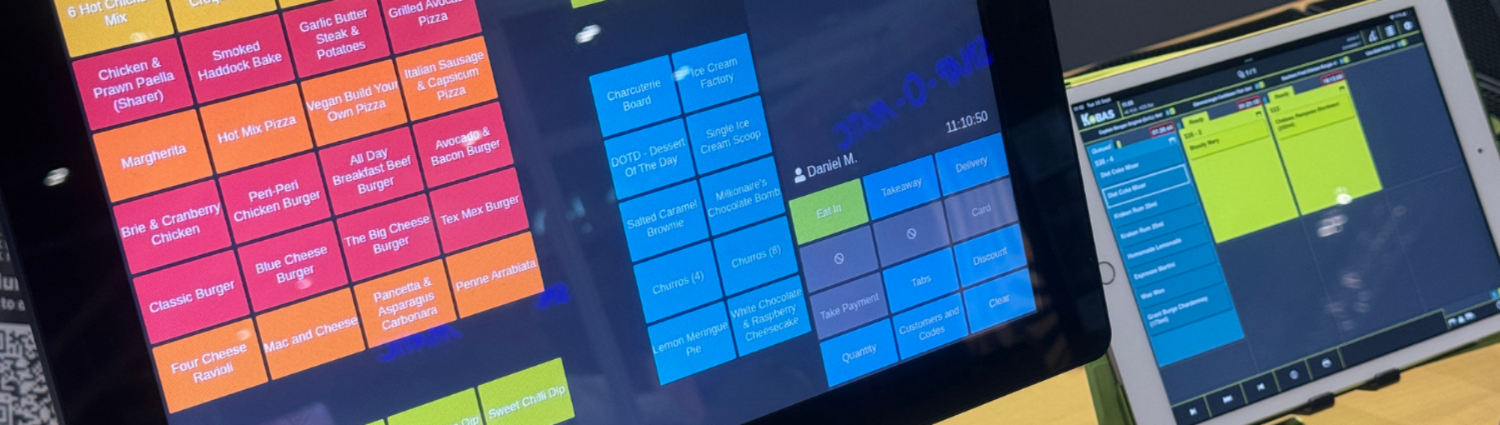
An all-in-one approach tends to appeal for one main reason: simplicity and efficiency. With a central system handling core functions, hospitality teams have fewer moving parts to deal with. Sales, labour, stock, and reporting sit closer together, giving operators a more connected view of the business.
For growing hospitality groups, that joined-up technology structure can support:
Clearer reporting: When data sits within one connected platform, it’s easier to compare venue performance, overall profitability, track trends, and spot issues before they escalate.
Less duplication: Teams can spend less time entering the same information twice, cross-checking reports, or moving between systems to complete routine tasks.
Greater consistency: A central setup can make it easier to apply standard processes across all venues, while still allowing individual venues the flexibility and autonomy to manage their own operations such as stock ordering, menus, and beyond.
Easier onboarding: As groups expand, bringing new sites into one shared platform is simpler than introducing another mix of tools and processes.
Improved support: Liability sits with one core supplier, reducing various points of failure and offering greater (and closer) support.
These benefits can be especially attractive for businesses that want more control without adding more admin.
It’s important to note that not all “all-in-one” hospitality systems are created equal. Some are designed specifically for start-ups and smaller venues, offering entry-level EPoS alongside tools with simple functionality for businesses with simpler operational needs. These platforms can provide an affordable and convenient starting point.
Other all-in-one systems, or complete systems, have evolved beyond this approach with heavy investment in developing advanced functionality in-house such as Stock and Workforce Management.
The good news: It’s not necessarily one or the other
A complete system only works well if it is genuinely strong in the areas the business relies on. If the stock tools feel too light, the rota functionality lacks depth, or the EPoS is not suited to the service model, operators may end up sacrificing too much in return for convenience.
That’s why rather than choosing between an EPoS with a mix of integrations or an all-in-one model, many businesses lean towards a complete core system that handles key operational areas well, with selective integrations around the edges where desired.
Some providers, such as Kobas, take this approach. The idea is to give operators a connected system across key areas like EPoS, Stock, Teams, Customers, and more, while still supporting quality integrations where it makes sense operationally. For example, across accounting and marketing platforms. This structure also enables small businesses to start simple with the essentials and grow into more of the system (or integrate) when they’re ready, reducing the need to switch or search for various integrated platforms when their requirements grow. On the other hand, multi-site businesses have the flexibility to utilise central functionality, or mix in their preferred integrations.
What hospitality groups should consider before making the switch

There is no one-size-fits-all answer, but a few practical questions can help shape the decision.
How much friction exists today? If managers are spending too much time reconciling data, switching between platforms, or chasing clarity from multiple systems, that is worth paying attention to. Time = money!
Where does the business need the most depth? If one area has very specific operational demands, that may justify a specialist platform or ensuring the complete system has the functionality required in that area.
Is growth part of the plan? As businesses scale, simplicity often becomes increasingly valuable. What works for a small group today may feel much harder to manage across a larger estate tomorrow.
Do integrations genuinely work well? Not all integrations are equal. A connected setup is only useful if data flows reliably and teams can trust the outputs. If an EPoS provider integrates with a Stock Management system, a Customer Loyalty platform, a Team Management platform, and more, they all have separate integrations which were developed at different times. It’s important to understand how these integrations are maintained to ensure stability and even data security.
Conclusion: What is the better option?
For some hospitality groups, best-of-breed tools will continue to be the best fit. They can offer strong functionality and tailored depth where the business needs it most.
But for many growing operators, Head of Systems or IT Managers are often busy with an array of other tasks and one core system with a selective integration strategy is often the most sustainable route for them and the business.
This flexible approach can bring more clarity, allow businesses to understand business profitability in a snapshot, reduce admin, improve consistency, and make it easier to manage operations across multiple venues. And in hospitality, where time and visibility matter so much, those practical gains can carry real benefits.
That is exactly why the conversation is increasingly moving away from “all-in-one versus separate tools” as a strict either-or debate.
Instead, it’s becoming a question of where a business wants simplicity, where it needs flexibility, and whether a core platform can deliver both well enough to support growth.
The bottom line is: Hospitality teams don’t need more systems; they need good ones.
The best technology setup is not necessarily the one with the most features, or the most brands in the stack – it’s the one that helps the business run smoothly, gives teams confidence, and supports better decisions across the group.
For some, that will mean specialist tools. For others, it will mean moving towards a more connected system.
And for many hospitality groups, the sweet spot may be a strong all-in-one foundation with the right integrations layered around it. That way, the business gets the control and visibility of a central system, without losing the flexibility to adapt where needed.
Want to see the Kobas system in action?
Kobas enables teams across the hospitality industry to manage all areas of the business, from one connected and complete system.